Nursing is one of the most in-demand careers in California right now, but the path to actually holding a license involves more paperwork than most people expect. Here’s how the process really works, step by step.

Step 1: Complete a BRN-approved nursing program
You’ll need to graduate from a nursing program approved by the California Board of Registered Nursing (BRN), either an Associate Degree in Nursing (ADN, usually 2 to 3 years) or a Bachelor of Science in Nursing (BSN, usually 4 years). Programs from unapproved schools won’t qualify you to sit for the licensing exam, so this is worth checking before enrolling anywhere.
Step 2: Apply to the BRN
You can start the application before graduation, but the BRN recommends submitting no earlier than two weeks before your graduation date, since applications get processed by cohort (your whole graduating class at once). You’ll submit transcripts, proof of program completion, and pay the application fee.
Step 3: Get fingerprinted
California requires a background check through Live Scan (in-state) or a fingerprint card mailed in (if you’re out of state). This is a standard step for any healthcare license in California, not something specific to nursing, but it’s easy to overlook and can slow things down if you wait too long to schedule it.
Step 4: Register for the NCLEX-RN
Once the BRN confirms your eligibility, you’ll register separately with Pearson VUE to schedule your NCLEX-RN exam date. This is the national licensing exam every RN candidate in the U.S. has to pass, and California’s first-time pass rate runs around 87%.
Step 5: Pass the exam and receive your license
Once you pass, and your background check and paperwork clear, the BRN issues your RN license. At that point, you’re legally allowed to practice as a registered nurse in California.
One thing to know: California isn’t part of the Nurse Licensure Compact
If you’re moving from another state, your existing multistate license doesn’t automatically work here. You’ll need to apply for a California license by endorsement, which still means submitting your credentials, fingerprints, and exam verification to the BRN.
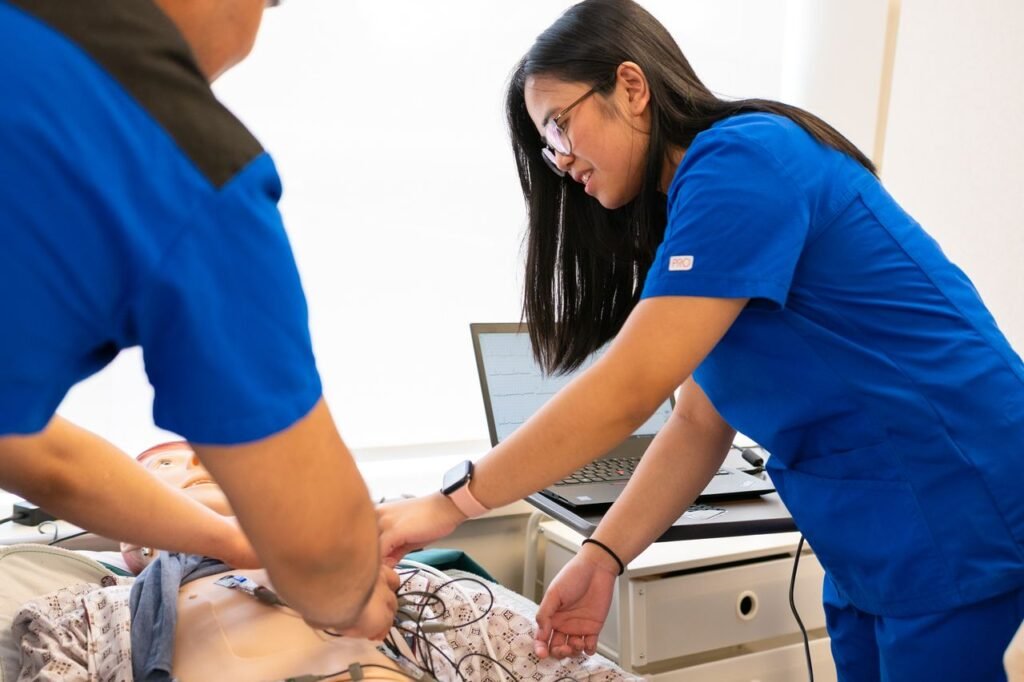
After licensure: finding your first job
Hospitals in California, especially in higher cost-of-living areas, often hire new grads into structured “new grad residency” programs that run 3 to 6 months of paid, supervised training before you’re on your own. These programs are competitive, so many new RNs apply months before their license is even finalized.
Keeping your license active
California RN licenses renew every 2 years, and you’ll need 30 hours of continuing education from BRN-approved providers to renew, plus a 1-hour implicit bias course. New nurses renewing within 2 years of their first NCLEX pass are exempt from the 30-hour requirement for that first renewal only.
If you’ve ever looked into nursing in California, you know the paperwork can feel more overwhelming than the clinicals. While researching the exact BRN requirements for 2026, I broke down the official steps so you don’t have to get lost in bureaucratic jargon.